


 FREE Delivery over £35
 Unbeatable Prices
How to Organise Your Desk
If you’re someone who lives that maximalist life – someone who collects cards, pens and old chargers – it can be difficult to get your desk organised. But it doesn’t have to be.
With Cartridge People’s simple, easy to follow principles, your desk will be a well-organised machine before you know it!
Why Does Desk Organisation Matter?
Desk organisation really is important. Stephanie McMaims & Sabine Kastner, researchers at the Princeton University Neuroscience Institute, discovered that our brains value organised environments over disorganised ones. This research also suggests there are real benefits to working in such a space.
In ordered environments, our brains tend to reduce cognitive load – providing mental clarity and increasing productivity. This enables us to get more work done or use our available time much more efficiently.
There are a few products you can use to organise your desk space. Some desktop essentials that we frequently recommend include desk tidies and drawers. But these are just essentials. In this article, we’ll be going in depth on how to organise your desk for maximum productivity.
Start With a Blank Slate
Organising your desk space when it’s empty makes the process much simpler. To start, clean your desk of everything – yes, everything. Make sure your desk is dust free for best results.
Don’t panic. You’ll be adding your items back soon. In the meantime, make sure you keep frequently used items like pens and notepaper to hand.
If you need somewhere to store your things in the meantime, use a spacious storage container. You’ll be able to use it as additional storage space later.
Declutter Ruthlessly

It’s time to be brutal.
Only keep the items you need.
Making sure you have enough space is essential, especially if you’re working in a smaller space like a home office. While it’s not always black and white, taking a binary approach will help you to quickly decide what’s needed and what’s just there for the sake of it.
If this seems too harsh, any ‘just in case’ items can be stored in a nearby drawer or that storage container for safekeeping or occasional use. Everything else? Bin it!
Prioritise Essentials With Smart Storage
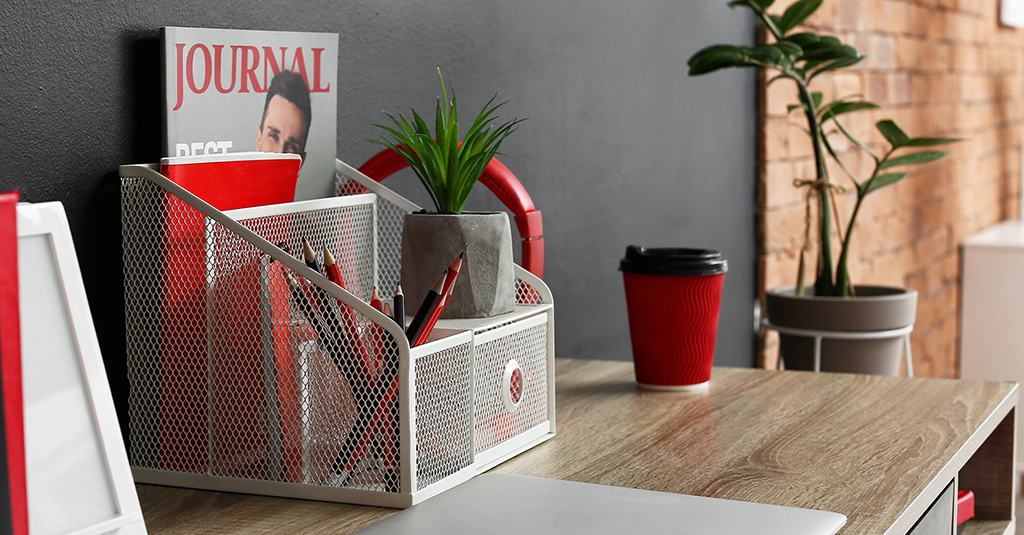
Work smarter not harder by selecting items that serve a functional purpose. Examples of smart storage include:
- Desk organisers and tidies sometimes have multiple compartments, giving you more storage space and reducing clutter by giving each item its own space.
- Drawer organisers offer a versatile storage solution and are great for storing pens, pencils, rulers, staples and more. If space is at a premium in your work space, utilising your wall space is also a good idea.
- Literature holders allow you to store documents near your desk without taking up precious space on it.
- Whiteboards and glass boards allow notes and ideas to be viewable but off your desk.
You should keep the items you frequently use nearby. Items that aren’t picked up every day can be kept a little further away or deeper in a drawer.
Elevate Your Desk Space
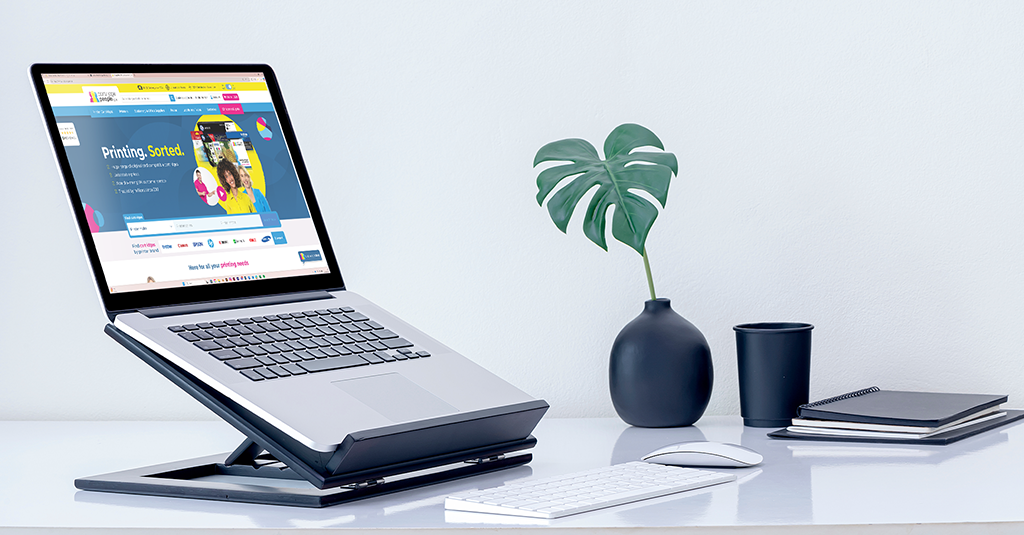
And while we’re at it, don’t neglect verticality when designing your new desk space!
Proper posture minimises back pain, meaning that you don’t have to deal with that pain in or out of work. Laptop and monitor risers ensure your devices are at eye level for greater comfort and reduced neck strain. Likewise, copyholders also elevate important documents to eye level. Many risers and copyholders are adjustable, meaning you can adapt them to suit your height and working style.
Letter trays can often be stacked, keeping the documents you may need to access away from your main working area. This keeps everything organised and pain free.
Embrace Cable Management
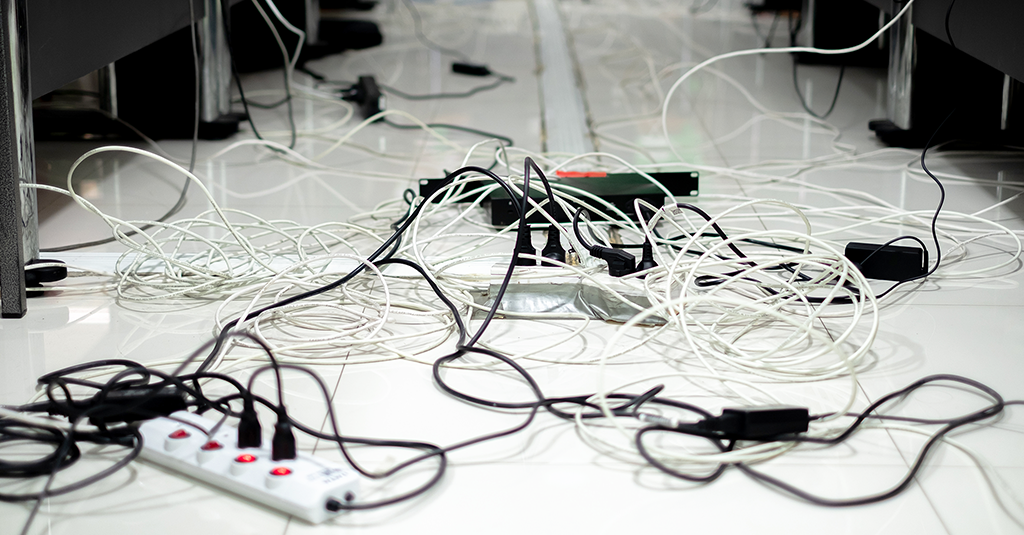
Cluttered wires are an unfortunate inevitability in an office space. But when properly managed, you’ll hardly know they’re there!
Cable ties, clips and wraps are all suitable options. Not only do they make your desk cleaner, but they also create a safer working environment by removing trip hazards.
Create Functional Zones

Like any seemingly monumental task, breaking it down into manageable chunks can help a lot.
Start by mapping out your desk space, either mentally or with a quick sketch on a sticky note. Desk drawers should be used to store personal items, as well as infrequently used products like ink or toner cartridges. Items on the desktop should be used on a daily basis. If it’s not used every day, it goes in the drawer!
Remember that you need enough space to work, so ensuring your workspace is as open as possible is crucial.
Make Your Desk Your Own
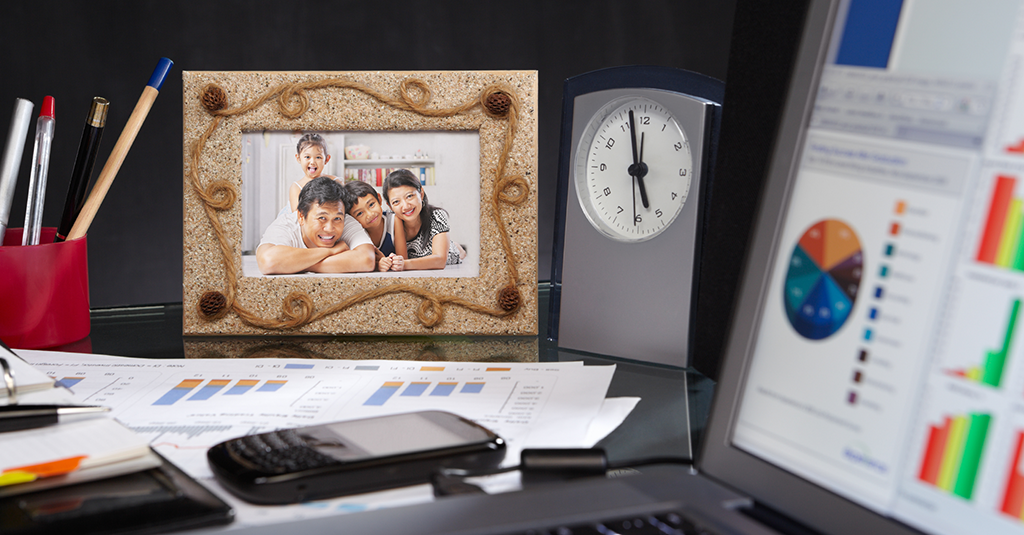
Now it’s time to add personality to your office space by choosing items that make you happy, such as a treasured family photo. This is a great way to express your creativity at work. Be careful not to clutter your desk, though. Keep personal touches minimal but enough to make your desk unmistakably ‘you’.
Additionally, labelling or colour coding desk drawers allows you to create your own desktop organisational system that makes sense to you and fits your style.
Establish a Cleaning Routine

You’ll need to clean your desk again at some point. How often you do depends on the amount of space you have and what items are on your desk.
What matters most is that you clean your desk at the same time, every time. This will enable you to create a routine you’ll stick to. The cleaning supplies you’ll need include things like cleaning cloths and wipes. Taking any items off the desk prior to cleaning will make the process easier and quicker as the largest surface can then be cleaned in one go.
Don’t Forget Long-Term Storage

When thinking about storage solutions that are effective and last, you’ll need products like storage boxes and lever arch files. If you need to store a large number of documents, consider buying a filing cabinet for a durable, high-capacity storage solution.
Organising with labels or colour coding allows you to quickly locate items you haven’t accessed in a while and may have forgotten the location of. Sorting either alphabetically or by date are both good systems to implement, so go with whatever works best for you.
Organise Your Desk With Cartridge People
And that’s how to organise your desk!
At Cartridge People, we have everything you need for optimal desk storage and cleaning. We also carry a wider range of office supplies to maintain your productivity at work, as well as a comprehensive selection of ink and toner cartridges from all the well-known brands like HP and Brother.
About The Author
