


 FREE Delivery over £35
 Unbeatable Prices
How to Choose a Notebook
The humble notebook is a reliable, everyday tool for lots of different uses at home, work or school. A notebook offers a way to communicate away from the addictive algorithms of the digital world.
But not every notebook is equal. Certain notebooks are better suited to certain tasks. Office workers will need something sturdy, to withstand being thrown about in their workbag between locations. And if you use fountain pens, you’ll need to prioritise thicker pages, as they tend to bleed through thinner pages.
When you choose your notebook, you’ll want to keep the following in mind:
- What will your notebook be used for?
- Notebook sizes
- How it’ll feel to carry around
- The cover and binding
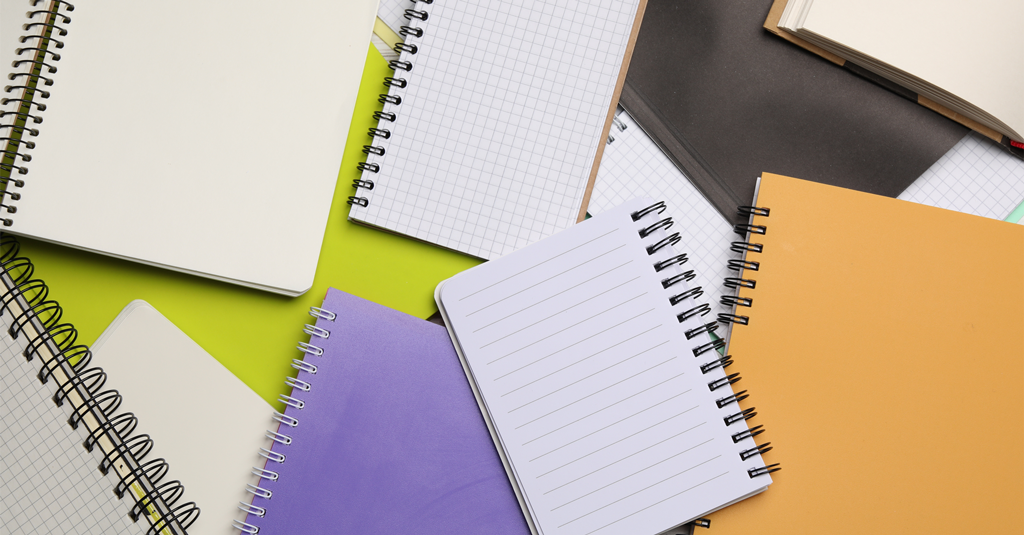
- The type of paper: blank, lined, grid or dotted
- Paper Weight (GSM)
- Any useful features
In our helpful guide below, we’ll be going through all these variables. Use our glanceable table below for a very basic overview. Please keep in mind, however, that these are generalisations and you should always choose whatever type of notebook works best for you:
| Notebook User | Ideal Notebook |
| Notebooks for Bullet Journaling | Dotted paper |
| School Notebooks | Lined or grid paper |
| Notebooks for University Students | Lined or grid paper |
| Notebooks for Work | Lined hardback |
What will your notebook be used for?
Your specific task or use case will determine the kind of notebook you need. Specifications like cover and paper type, as well as binding are all especially suited to particular use cases, so it’s important to think about how you will use it before buying.
Notebooks for Journaling
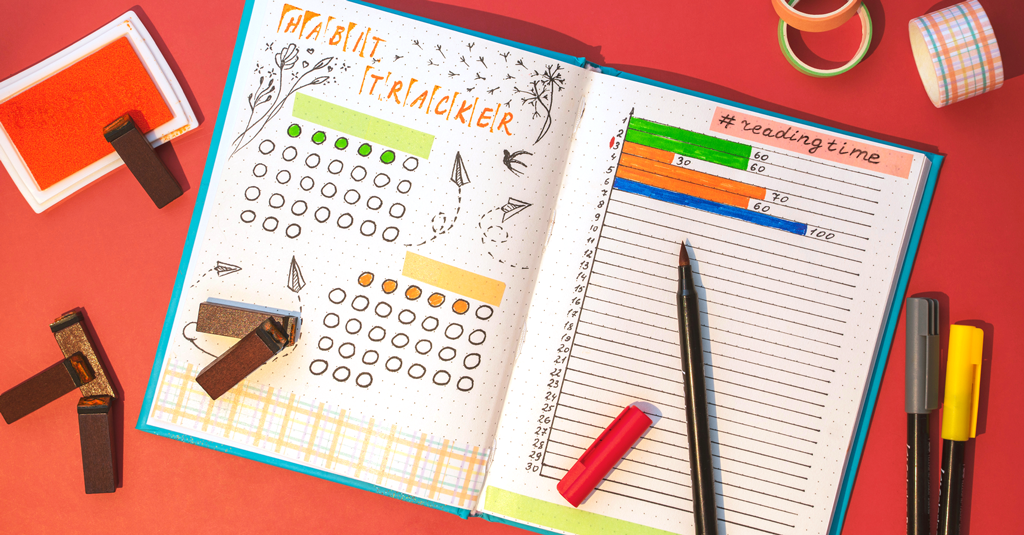
Bullet journals are all about customisation and personalisation. The best notebooks for journalling are dotted notebooks as they’re more discreet than lined paper. While dotted notebooks are generally recommended for journalers, lined notebooks can also work.
School Notebooks
Pupils taking notes often need to get a lot of information written down in a short amount of time. Ruled paper removes the guesswork and ensures notes are straight, meaning kids can concentrate on the lesson instead. This is why it’s also great for younger children learning to write.
Notebooks for University Students
Generally speaking, university students would benefit more from lined notepaper as it helps with neater notetaking that can be easily understood when referred back to. Engineering students, on the other hand, would get more use out of dotted paper, while Maths students should use grid paper and Science students will likely use a combination of all of the above.
Wire bound notebooks with perforated pages allow you to place your notes in a folder once you’re done writing them. Students would also benefit from a project book if they want to sort their notes by subject/module.
Notebooks for Work
Office workers should choose lined paper for orderly notes that can be easily understood when referred back to or shared. Perforated pages can be placed into ring binders or lever arch files for better organisation. Hardback notebooks add a sense of professionalism, which is something to consider when taking notes in front of clients and/or stakeholders.
Notebook sizes
Another important consideration is what size of notebook you’ll need. Think about the context in which you’ll mostly use your notebook and that will partially determine the best paper size for you. Will you use it at home, in the office or will you take it with you everywhere you go?
A5 Notebooks
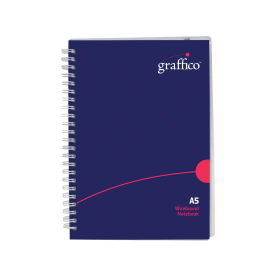
Half the size of an A4 piece of paper, A5 is the typical notebook size. This is the most versatile size of notebook as it offers an ideal compromise between A4 which may be too large for everyday use and pocket notebooks, which may not be suitable for frequent notetakers.
Pocket Notebooks
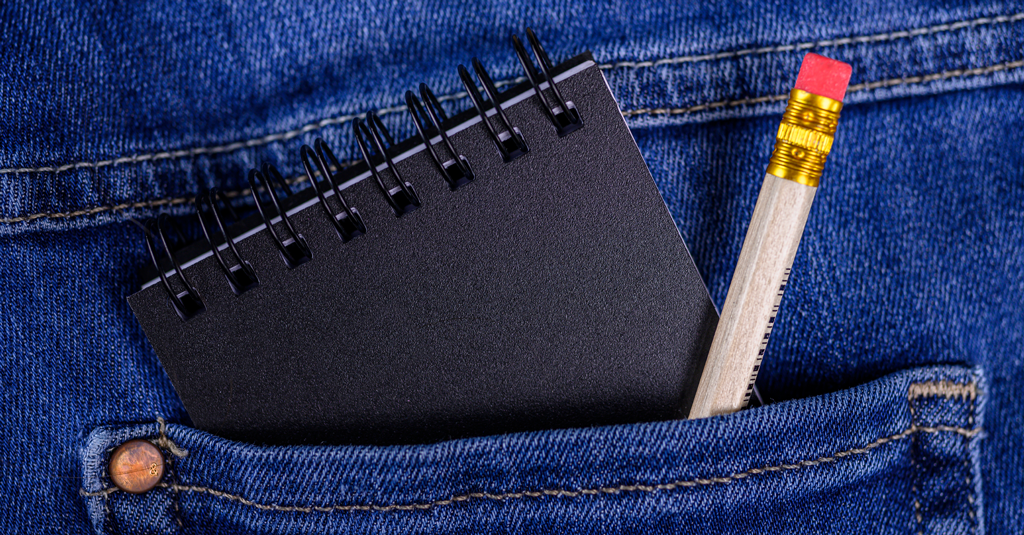
More travel-friendly, pocket-size is the perfect notebook size for those who need to carry around their notes and be able to write things down on-the-go. One of the trade-offs however, is that there’s less space to write – so if you need to write a lot, you may struggle.
How it’ll feel to carry around
The backing and binding of a notebook will affect whether it’s suitable to travel with. When choosing a notebook, consider the weight and size and whether or not it’s practical to carry around. You don’t want a notebook with a cover made from a fragile fabric that could get easily damaged in your bag or pocket.
The cover and binding
Notebook covers and bindings aren’t just aesthetic choices, they affect how they feel to carry and write in.
Hardback Notebooks
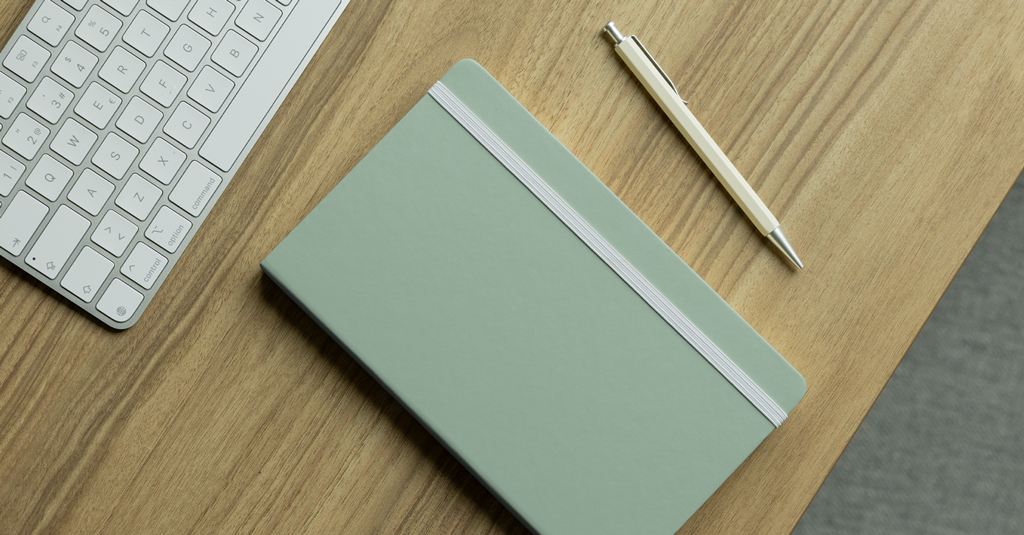
While hardcover notebooks offer a more premium/professional look and feel, they will generally be heavier. Consequently however, they’ll also be sturdier.
Soft Cover Notebooks
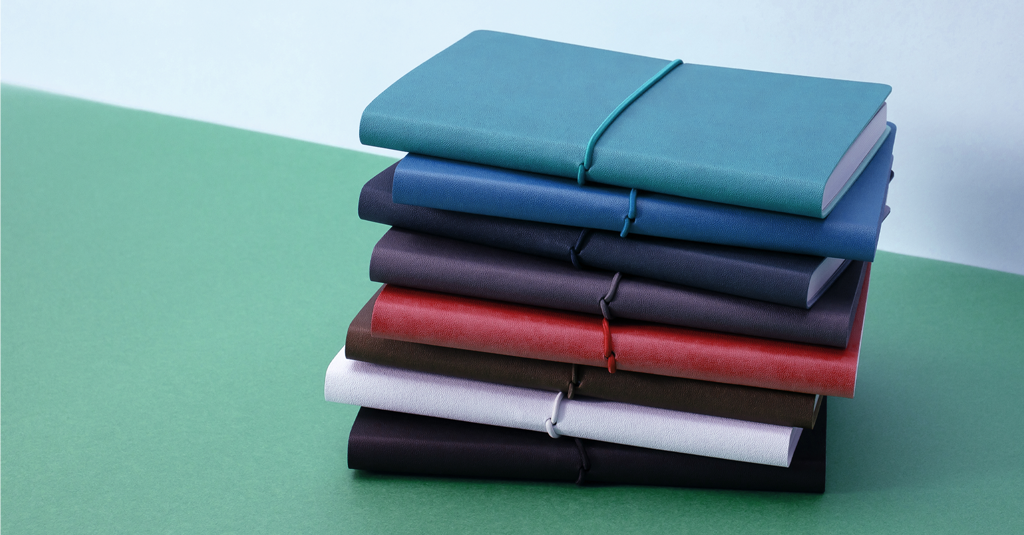
Conversely, while soft cover notebooks are less durable, they’re more lightweight and better suited to carrying around.
Wirebound Notebooks
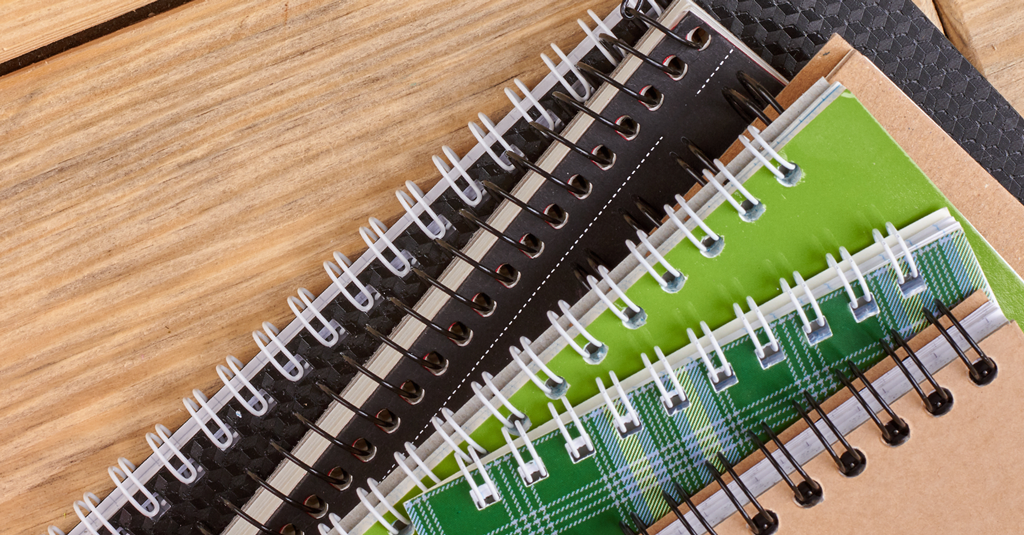
Wire bound notebooks keep other pages completely out of view. While they’re not the best option for left-handed writers (who may find themselves leaning their hand on the spiral uncomfortably), they can be a convenient option for on-the-go notetaking.
Often featuring perforated pages, spiral and wire bound notebooks allow you to take notes that are easy to file away, making them great for revising, or any notes that must be archived.
The type of paper: blank, lined, grid or dotted
Now you’ve decided on a cover and a type of binding, what about the ruling of the pages themselves? Well, this depends much more on your use case as this will determine the way in which you use your notebook.
Dotted Notebooks
Dotted notebooks are perfect for bullet journalling and creative planning, as they offer a lot of customisation. While you don’t have the structure that lined paper provides, you do still have the dots to guide you.
Blank Notebooks
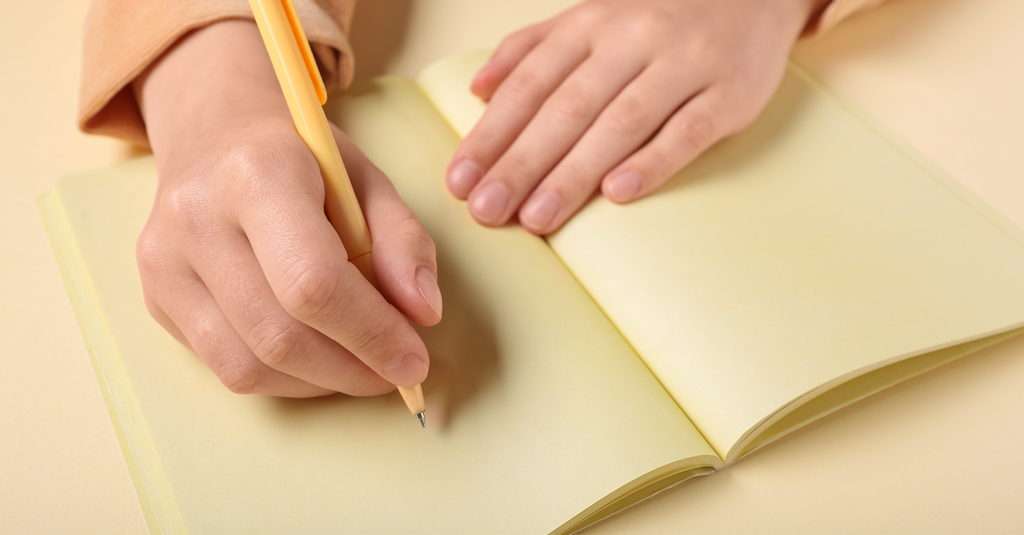
Plain notebooks are great for sketching or for those more confident writing without the guidance that lines provide. Blank notebooks provide the ultimate potential for customisation and creativity.
Grid Notebooks
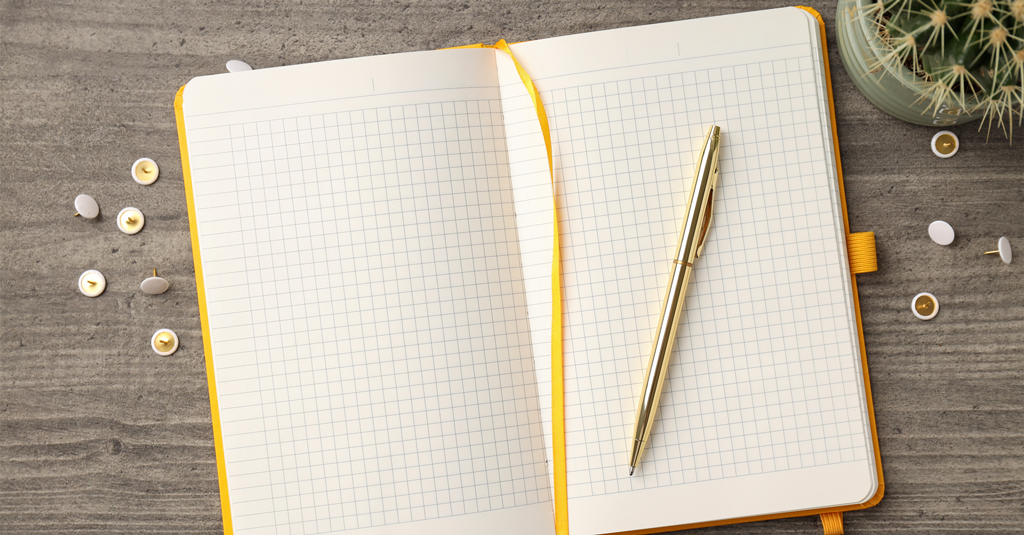
Grid paper is ideal for mathematical applications and those needing to draw geometric shapes, such as architects. The grids provide precision when carrying out mathematical work, such as formulas and calculations. One downside though is that you’re not able to customise a grid notebook as much as the grids are quite visible.
Lined Notebooks
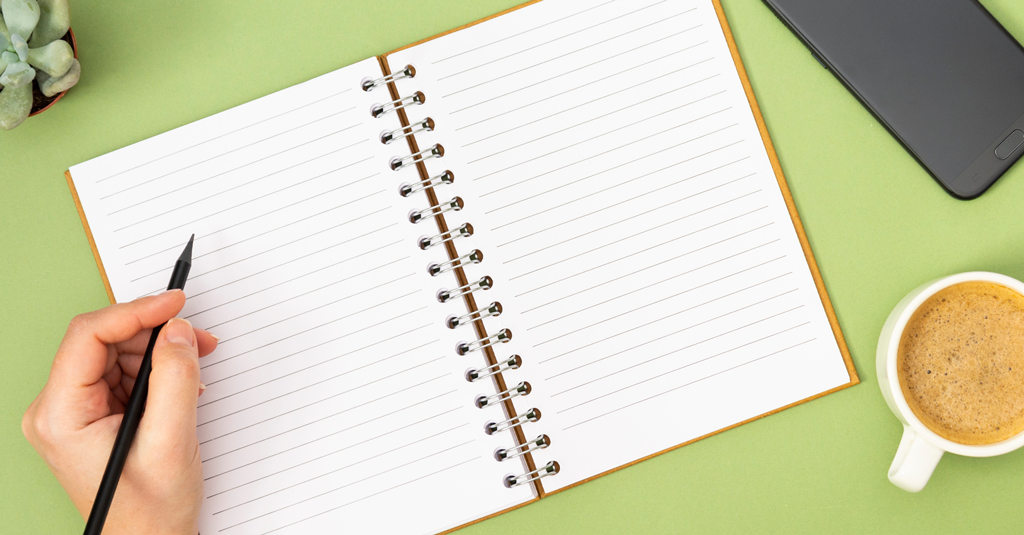
Those who need to prioritise neater notetaking should consider a lined notebook. A practical choice, this type of paper can also include margins for supplementary notetaking, such as days of the week, or subheadings. Those in meetings, lectures or lessons would benefit from this common notebook type.
Paper Weight (GSM)
When you think about paper thickness, you’re probably actually thinking about the weight. Technically, paper thickness is measured in microns but usually people use paper weight (gsm) to indicate the thickness of a sheet of paper.
While most sheets weigh around 80gsm, consider a heavier weight to avoid potential issues when used with particular types of pens. Using thin paper can lead to bleed-through, ghosting and feathering.
Any useful features
Useful additional features you may also want to look out for include:
- pockets
- bookmarks
- page numbers
- indexes
- elastic closures
While these are all nice to have, the focus should always be on what type best suits your use case.
Final Thoughts
Size, binding, cover and paper type should all be considered when choosing a new notebook. While the sheer variety of notebook types can seem intimidating initially, one way to look at it is that this provides numerous ways in which you can personalise your purchase and find the perfect notebook for you.
Office Supplies at Cartridge People
Find everything you need for comfortable and convenient notetaking at Cartridge People. Whether it’s a notebook to write in (be it hardcover, soft cover, dotted or ruled notebooks) or the pens to write with (like ballpoint, gel pens, fountain pens and highlighters), our comprehensive range of office supplies has got you covered.
FAQs
About The Author
